


Why Choose Us
Shanxi Betop Industry and Trade Co., LTD. was founded in 2008, and honored as "Shanxi Provincial private science and technology enterprise", "Top 50 Taiyuan Manufacturing Enterprises". We specialize in producing T2 Cleaning Rubber C, T2 Solution B, T2 Solution A, T2 Compound B, Conveyor Belt Repair Patch, Conveyor Belt Cover Strip, Clean Solvent, Conveyor Belt Repair Glue, and other Conveyor Belt Cold Splice.
Advanced Equipment
Our company owns advanced testing instrument produced by Taiwan Gotech Testing Machines Co., Ltd. and Harbin Hapro Electrical Technology Co., Ltd.
Rich Experience
We expertise concentrate maintains for more than 15 years on fire retardant pulley lagging products specifically applied in large and underground coal mines. The products have been exported to more than 50 countries and regions all over the world.
Conveyor Belts One-stop solution
Our products include cold bond adhesives, quick repair glues, hot splicing joints tie gum, cover sheet, pulley lagging rubber sheets, sealing skirt board covering nearly all the materials necessary for conveyor belt reparation.
Quick Response
Our commitment is to respond to your inquiries within 24 hours, ensuring that you receive the information and support you require in a timely manner.

Nature color rubber used for good sealing properties for conveyor belt transporting materials, skirt rubber can be different color,such as black, orange, red and others.

Flex-lag rubber lagging,also called diamond strip lagging used for drive pulleys of low to medium loaded conveyor belt, reduce slippage between belt and pulley, improve and stabilize coefficient of friction, prevent the pulley against wear and corrosion, strong adhesive system with CN bonding layer.

Ceramic lagging sheet with vulcanised alumina oxide Al2O3 ceramic tiles, used for drive pulleys, operating under wet ,clay-containing, muddy and extreme conditions, highly wear resistant, strong adhesive system with CN bonding layer. Ceramic lagging sheet 10m length selling very well.
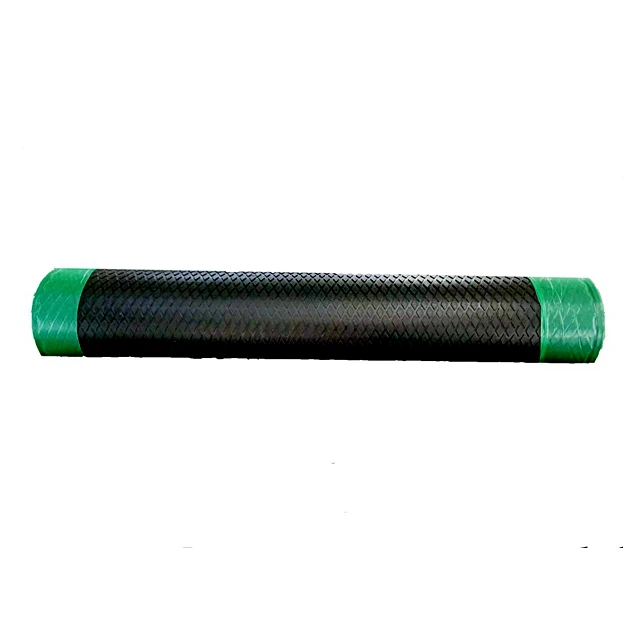
Mini diamond pulley lagging sheet used for drive pulleys of low to medium loaded conveyor belt, reduce slippage between belt and pulley, improve and stabilize coefficient of friction, prevent the pulley against wear and corrosion, strong adhesive system with CN bonding layer

Diamond pulley lagging sheet used for drive pulleys of low to medium loaded conveyor belt, reduce slippage between belt and pulley, improve and stabilize coefficient of friction, prevent the pulley against wear and corrosion, strong adhesive system with CN bonding layer.
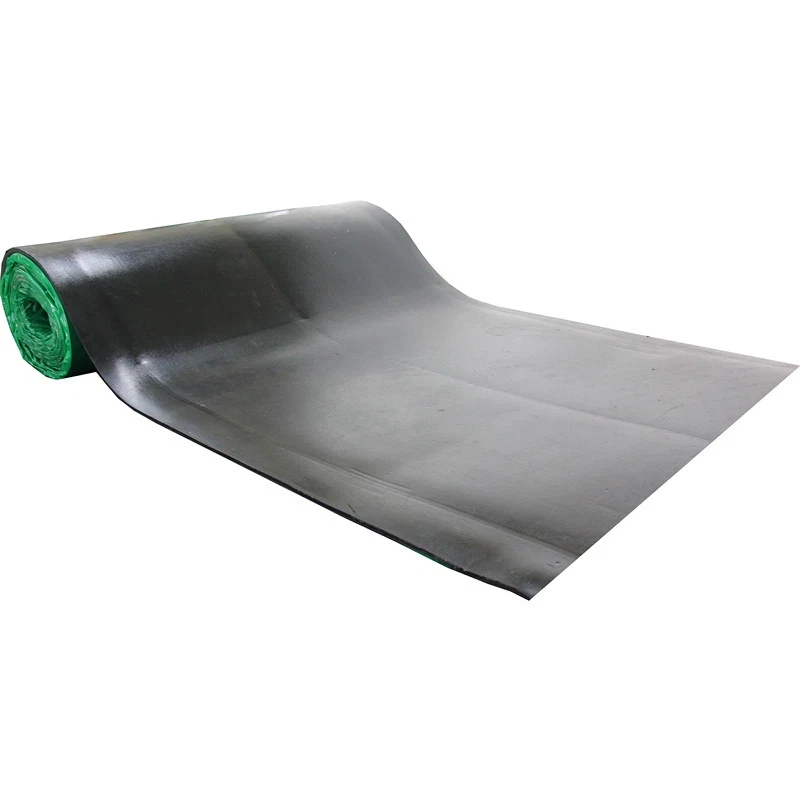
Plain pulley lagging used for pulley lagging of low to medium loaded conveyor belt, reduce slippage between belt and pulley, improve and stabilize coefficient of friction, prevent the pulley against wear and corrosion, strong adhesive system with CN bonding layer.
What is Ceramic Pulley Lagging
Ceramic pulley lagging is a reliable solution for belt slippage problems, that conventional rubber lagging often cannot correct. In fact, it features the highest co-efficient of friction available in lagging materials which may be two to three times the friction of rubber in wet, muddy or dry conditions. If you want to know the specifications and prices of Ceramic Pulley Lagging, please contact us!
Advantage of Ceramic Pulley Lagging
High quality
With CN semi-vulcanized layer, hardness less than 60 Shore, excellent wear resistance, anti-corrosion performance, excellent anti-aging performance. The general service life is more than 5-10 years under normal pressure and temperature. Excellent bonding strength(12-15N/MM) between rubber and metal, while the domestic hot vulcanized lagging sheet is 3-10N/MM. The excellent bonding strength effectively avoids the occurrence of cracking and splitting between the rubber layer and the metal, and the comprehensive performance of the rubber is excellent.
Easy to Operate
The excellent rubber friction coefficient can effectively prevent the conveyor belt from slipping in the wet and muddy working environment, thus making the operation and construction easy, increasing the service life of the drum, and convenient and quick on-site construction.
High Strength
The rubber elastomer has dense molecules, possessing features such as good vibration absorption, mechanical impact resistance, high strength, rigidity, absence of creep, strong impact resistance, shock resistance, water hammer resistance, and ease of transport, installation, and maintenance.
Wide Temperature Range
BAI-OTT pulley lagging sheet can be used for a long time in the range of -20°C to +80°C, and the rubber layer will not be separated from the metal roller due to temperature changes.BAI-OTT pulley lagging sheet.
Low Energy Consumption
The customized diamond pattern, herringbone pattern, or ceramic rubber plate on the surface of the drum has good lubricity, small loss of running resistance, and saves running costs.
Type of Pulley Lagging


Rubber Lagging
Rubber is the most common type of pulley lagging. It is a relatively 'soft' material which offers good traction and is resilient to wear. Other functions include protection for the pulley shell and increased friction for conveyor belts.
There are many options when considering rubber lagging. It can be grooved and shaped to offer greater flexibility depending on your application.
Another added benefit of rubber is its one of the most affordable types of pulley lagging.
Rubber lagging is a versatile product. Depending on your application, different properties such as thickness and hardness can be utilised to achieve your outcomes. Rubber lagging can also be grooved into just about any shape or pattern.
One of the challenges with rubber lagging is that the operational life is limited and must be replaced routinely. Belt slippage can still occur even though rubber lagging increases friction to the conveyor belt.
Rubber lagging is not the most optimal pulley lagging product to achieve high levels of friction.
Ceramic Lagging
Another common type of pulley lagging is ceramic. Ceramic is used because it is a more hardy and durable material than rubber. Harsh conditions and abrasive material are the two usual reasons why ceramic lagging is considered.
The most common types of ceramic lagging are 'smooth' and 'dimple'. Both of these products offer a significant increase in friction, grip and tracking of the belt and elimination or reduction of belt slippage.
Ceramic lagging is a more expensive option than rubber lagging however ceramic lagging has a greater service life and reduces lagging wear.
Drive pulleys are usually lagged with dimple ceramic lagging because the increased fiction and grip assists in driving the conveyor belt. The coverage of ceramic on the surface of the lagging can be customised depending on your application and is used to increase or decrease friction and grip.
It can also be used to increase wear resistance depending on your needs and budget.
Non-drive pulleys can be lagged with smooth ceramic lagging. This is less common than drive pulleys as ceramic lagging is more expensive than rubber lagging and is only used when necessary.
Ceramic lagging can be applied to the pulley shell as a rubber backed ceramic strip or sheet. The rubber backing is bonded to the pulley shell. The other method is to directly bond the ceramic tiles to the pulley shell.
There are a few issues with ceramic lagging. Ceramic can be fragile and prone to cracking. Falling material and hard objects caught between the lagging and belt are the usual cause of this issue. Further, conveyor design, transition distances and drive traction should all be carefully considered when selecting ceramic lagging.
Other Lagging Options
Another type of pulley lagging is polyurethane or plastic lagging. Polyurethane lagging can be applied as a sheet or strip. The method of bonding is usually rubber backed polyurethane or cast the polyurethane directly on to the pulley shell. Although not as common as rubber and ceramic, polyurethane lagging is gaining popularity in some applications and can provide good service life. Cast polyurethane lagging can be very expensive to apply and extremely difficult to remove for repair, thus its generally only used when rubber and ceramic lagging has proved less serviceable.
A less common option is to leave the pulley shell bare and apply no lagging. This option offers the lowest friction because the conveyor belt is in direct contact with the pulley shell. The disadvantage of not utilising any lagging is that the pulley shell has no protection to wear and will often result in total replacement of the pulley shell.
Lagging plays a crucial role in protecting the pulley on your belt conveyor system, increasing belt friction and reducing abrasive wear as well as material build-up. It is the layer of material bonded to the shell of a conveyor pulley, typically covered in some form of rubber, ceramic, polyurethane, or other materials. The material chosen is highly dependent on your specific application, as explained in our blog on how to choose lagging for your operation.
And with polyurethane lagging growing rapidly in popularity, we decided to take a deep dive into the pros and cons of polyurethane lagging versus full ceramic lagging. Keep reading as we weigh up the facts.
The Pros and Cons of Polyurethane Lagging on Your Conveyor
Also known as plastic lagging, polyurethane has been gaining popularity in non-drive pulley applications where there are concerns about carryback buildup between the belt and lagging. It can be applied as a sheet or strip, either bonded with rubber-backed polyurethane or cast directly on the pulley shell. Compared to rubber lagging, it has a three to five times longer service life and provides higher abrasion resistance. The low coefficient of friction makes polyurethane lagging kind to the belt bottom cover, making it the ideal solution for belts with premature wear. Polyurethane lagging also poses very little risk of damage to the belt cover. It is commonly used on bend pulleys where there is slippage between the belt and lagging surface.
However, cast polyurethane lagging is very expensive to apply and extremely difficult to repair, it is generally only used when rubber or ceramic lagging has proved less serviceable. Furthermore, polyurethane lagging lasts a maximum of five years before the pulley needs to be refurbished. As mentioned, this is a very costly and labor-intensive procedure, hence polyurethane is recommended to be used only for bend pulleys and non-drive pulleys on turnover conveyors.
The Pros and Cons of Ceramic Lagging on Your Conveyor
Ceramic lagging is popular in applications where belt slip or high wear are a concern as it is more durable than rubber. The most common types of ceramic lagging utilize either smooth or dimpled ceramic tiles, both offering a significant increase in friction, grip, and tracking of the belt.
Ceramic lagging has four main advantages over other types of lagging:
1.The ceramic tiles are extremely resistant to abrasion so it can handle harsher materials and the dimples can significantly improve traction for drive pulleys.
2.The amount of coverage of ceramic on the surface of the lagging can be customized to your application and requirements, with options to feature 13%, 39%, and 80% ceramic coverage.
3.Ceramic lagging has a greater service life, which reduces lagging wear significantly.
4.Smooth ceramic lagging is the optimal choice for non-drive head pulleys; it has a flat, even surface for the belt and belt cleaners to run efficiently.
There aren't many negatives to consider when installing ceramic lagging, but it is best to get expert help when choosing the right type of lagging for your belt conveyor system. For example, depending on the conveyor design when choosing dimpled ceramic lagging, belt clawing or bottom-cover damage can be displayed if there is belt slippage present, as the dimples can claw the backside of the belt. So, it makes sense to talk to a trusted expert when deciding what lagging is best for your system.
So, Which Belt Conveyor Lagging is Best?
Polyurethane and smooth ceramic lagging are both acceptable choices when deciding which lagging is best for your non-drive head pulley. However, if you want to make a cost-effective decision that will boost your productivity in the long term, full ceramic is the optimal choice.
Conveyor Ceramic Pulley Lagging Installation Procedure
Disconnect the conveyor's power supply and hang safety warning signs. Assess the condition of residual adhesive on the drum's surface to determine if it needs to be removed. Check if the drum can be manually rotated and, if necessary, disconnect the connecting pin. If the area covered by residual adhesive exceeds 0.5m², use an adhesive removal machine to eliminate it; otherwise, there's no need to remove it.
Grind the drum's surface to remove dirt, grease, and other substances that hinder adhesive bonding. Use mechanical, physical, and chemical methods to increase the drum's surface roughness, thereby enhancing the adhesive's wetting ability. Ensure safety by wearing protective eyewear and masks.
Clean the drum surface to remove dirt, dust, grease, etc., to ensure the adhesive's wetting. Use a high-quality cleaning agent and make sure the surface is thoroughly cleaned. Allow time for drying.
Apply a transition treatment by evenly coating the drum's surface with a metal primer. Allow it to dry completely to prevent surface contamination, extend the metal's storage period, improve adhesive wetting, and enhance adhesive bonding strength.
Apply the adhesive by mixing and stirring the cold vulcanizing adhesive and hardener. Apply it evenly to the metal surface of the drum, ensuring it dries completely, typically in 15-45 minutes. Multiple paint of adhesives can be applied.
Affix the ceramic pulley lagging by establishing a bonding reference line. Cover the semi-cured surface of the ceramic pulley lagging with plastic film, align it with the reference line on the drum, and attach it while pressing it firmly. Ensure the edges match the reference line. Our ceramic pulley lagging contains 20mm x 20mm alumina ceramic tiles embedded in specialized rubber. This design increases the friction coefficient on the drum's surface, reducing the likelihood of conveyor belt slippage, featuring a semi-vulcanized bonding layer, the ceramic pulley lagging bonding surface doesn't need to grind before use, and it can bond with cold vulcanizing cement directly.
Seal the seams by cutting a V-shaped groove at the outer edge. Use a steel wire brush to grind the groove, then clean off any dust. Mix components A and B of the adhesive at a 1:1 ratio and apply the first coat at a 45° angle to the seam. Allow it to dry completely until it is no longer sticky to the touch. Apply a second coat of the mixed adhesive. Preheat the adhesive gun and use it to fill the seam while compacting with a roller.
Certifications

Our Factory


Frequently Asked Questions
Hot Tags: ceramic pulley lagging, China ceramic pulley lagging manufacturers, suppliers, factory, rema quality ceramic lagging, Diamond Pulley Lagging Sheet, rubber lining for pulley, , diamond grooved rubber lagging


